


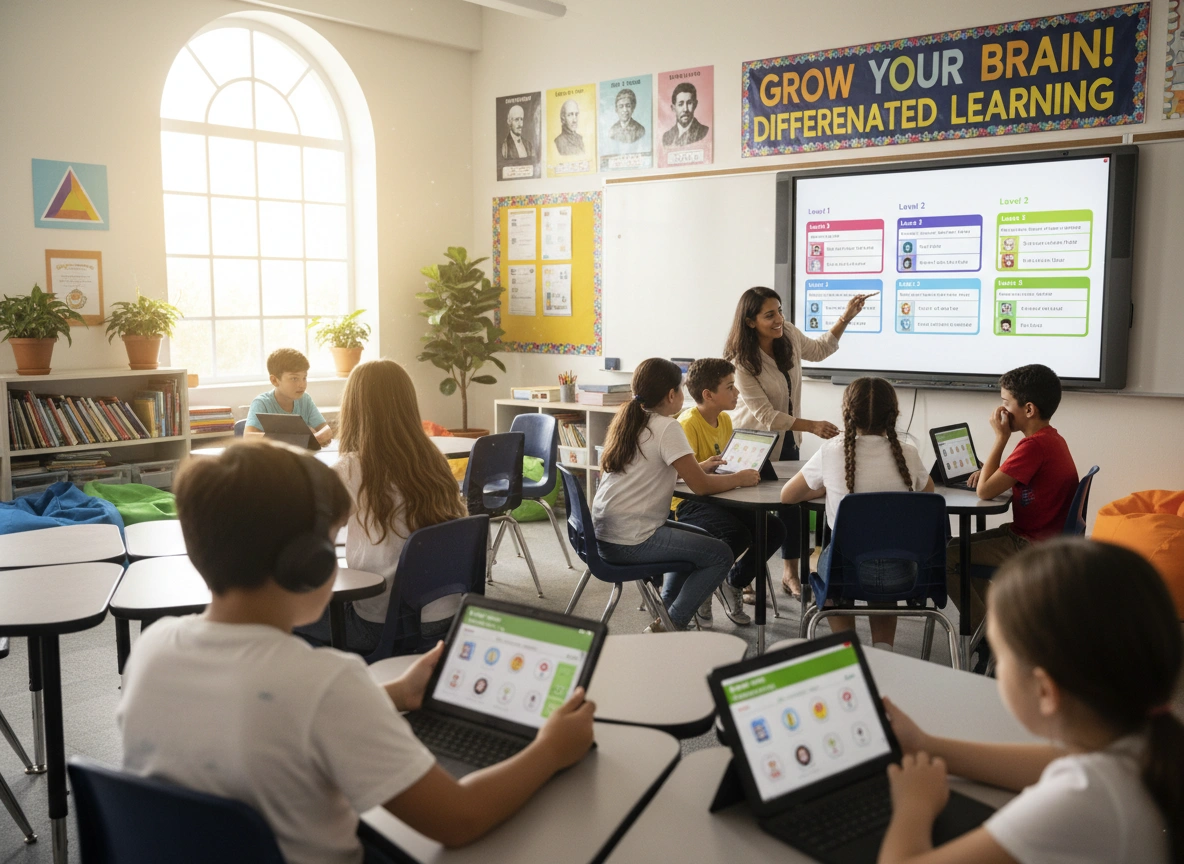
Every classroom is a diverse ecosystem of learners, each with unique strengths, needs, and paces of understanding. The one-size-fits-all model of education often fails to engage every student effectively, leaving some behind and others unchallenged. This is where differentiated learning comes in—an instructional framework designed to meet students where they are. Modern technology offers powerful tools to implement this approach, and the game-based learning platform Gimkit has emerged as a favorite among educators for its ability to make differentiation both effective and engaging.
This article explores how Gimkit’s features directly support differentiated learning strategies. We will cover the core principles of this educational approach, examine how Gimkit functions, and provide practical examples for teachers to create a more inclusive and personalized learning environment. By the end, you will have a clear roadmap for using Gimkit to cater to the diverse needs of your students.
The Importance of Differentiated Learning
Differentiated learning is an approach to teaching in which educators proactively adjust curriculum, instruction, and assessment to address the individual learning needs of students. Rather than expecting every student to learn the same material in the same way and at the same pace, differentiation acknowledges that students vary in their readiness levels, interests, and learning profiles.
The core idea is to maximize each student’s growth by providing multiple pathways to learning. This can involve modifying four key classroom elements:
- Content: What the student needs to learn or how the student will get access to the information.
- Process: Activities in which the student engages to make sense of or master the content.
- Products: Culminating projects that ask the student to rehearse, apply, and extend what they have learned.
- Learning Environment: The way the classroom works and feels.
A differentiated classroom is more equitable because it provides every student with the appropriate level of challenge. It helps prevent the frustration that comes from tasks being too difficult and the boredom that arises when they are too easy. By personalizing the learning journey, educators can foster a deeper sense of competence, autonomy, and engagement, leading to improved academic outcomes and a more positive attitude toward school.
What Is Gimkit? A Brief Overview
Gimkit is a game show-style learning platform created by a former high school student. It transforms traditional review sessions and quizzes into exciting, competitive games. At its core, Gimkit operates on a simple premise: students answer questions to earn in-game currency, which they can then use to purchase upgrades and power-ups. This gamified loop of “answer, earn, and upgrade” creates a highly motivating experience that keeps students invested in the material.
While it shares similarities with other quiz platforms like Kahoot! and Quizizz, Gimkit distinguishes itself with its economic-based game mechanics and a wide variety of game modes. These modes range from individual races to collaborative team efforts, offering flexibility that goes beyond a standard multiple-choice quiz. It’s this unique combination of engagement and versatility that makes Gimkit an exceptional tool for implementing differentiated instruction.
How Gimkit’s Features Support Differentiated Learning
Gimkit is not just a fun diversion; its features are thoughtfully designed to accommodate diverse learners. By leveraging its various modes and settings, educators can tailor the learning experience to meet individual student needs in several ways.
Catering to Different Pacing Needs
One of the most significant challenges in any classroom is managing different learning speeds. Gimkit addresses this directly through its core gameplay. Unlike platforms where the entire class moves to the next question simultaneously, Gimkit allows students to progress at their own pace.
A student who grasps concepts quickly can answer more questions and delve deeper into the game’s strategic elements. Meanwhile, a student who needs more time can work through the questions thoughtfully without the pressure of being rushed by their peers. This self-paced nature ensures that no one is left behind or held back, allowing for natural differentiation of processing time.
Adjusting Content with “Kits”
In Gimkit, a set of questions is called a “Kit.” Educators have complete control over the content within these Kits. This allows for easy differentiation of content. For example, a teacher could create several versions of a Kit for a single topic:
- Foundational Kit: Includes questions focused on core vocabulary and basic concepts for students who need reinforcement.
- Proficient Kit: Contains standard, grade-level questions that assess a solid understanding of the material.
- Advanced Kit: Features more complex, application-based questions that require critical thinking for students who have mastered the basics and need a challenge.
Teachers can assign different Kits to small groups or individual students based on pre-assessment data, ensuring that the content is appropriately challenging for everyone. Furthermore, Gimkit’s “Assignments” feature allows students to complete Kits as homework, providing them with even more flexibility to work at a pace and in an environment that suits them best.
Multiple Game Modes for Varied Processes
Gimkit offers a rich library of game modes, each providing a different process for engaging with the content. This variety allows teachers to differentiate the learning activity itself.
- Classic and Teams Mode: These competitive modes are great for students motivated by races and leaderboards. In Teams mode, students collaborate, allowing stronger students to support their peers. This fosters a sense of shared responsibility and peer-to-peer learning.
- The Floor is Lava: In this mode, teams must answer questions correctly to build their way to safety. It requires strategic communication and collaboration, appealing to students who thrive in cooperative settings.
- Trust No One: Modeled after the popular game Among Us, this mode requires students to complete tasks (answer questions) while trying to identify “impostors.” It appeals to students who enjoy social deduction and strategic thinking, adding a layer of engagement beyond simple recall.
- Draw That: This mode shifts the focus from text-based answers to visual representation. It is an excellent option for differentiating for visual learners or for topics that lend themselves to diagrams and sketches, such as science or art history.
By choosing a game mode that aligns with student interests and learning profiles, teachers can differentiate the process of learning while still covering the same core content.
Supporting Diverse Learning Profiles
Gimkit’s platform inherently supports various learning profiles. The fast-paced, visual, and interactive nature of the games appeals to kinesthetic and visual learners who may struggle with traditional worksheets or lectures. The immediate feedback—seeing if an answer is right or wrong and earning virtual cash—provides instant reinforcement that is highly effective for many students.
For students who require extra support, features like the ability to toggle music and sound effects can help reduce sensory overload. For those who benefit from repeated exposure, the cyclical nature of the game ensures they see questions multiple times. This repetition, framed within an engaging game, is far more effective than simply re-reading a study guide.
Practical Strategies for Using Gimkit to Differentiate
Knowing the features is one thing; applying them effectively is another. Here are some practical strategies for using Gimkit to implement differentiated learning in your classroom.
1. Use Gimkit as a Pre-Assessment Tool
Before starting a new unit, use a Gimkit game as a fun, low-stakes pre-assessment. The results can give you a quick snapshot of your students’ prior knowledge. Analyze the data to form flexible groups for the upcoming unit. Students who score high may be ready for enrichment activities, while those who struggle may need more foundational support.
2. Create Tiered “Kits” for Station Rotations
Design a station rotation activity where one station is a Gimkit game. Create three different Kits for the same topic at varying difficulty levels (tiered content). Assign students to a specific Kit based on their readiness level. This ensures that every student at the station is working on material that is challenging yet achievable for them.
3. Differentiate with Assignments for Homework
Use Gimkit’s “Assignments” feature to differentiate homework. This mode requires students to reach a certain cash goal rather than play for a set amount of time. You can set different cash goals for different students. For students who need more practice, a higher cash goal means they will have to answer more questions correctly. For students who are ready for a challenge, you can assign an advanced Kit.
4. Foster Collaboration with Team Mode
Use “Teams” mode to create mixed-ability groups. This allows students to learn from one another. The collaborative nature of the game encourages peer tutoring, as stronger students often help their teammates understand difficult concepts to help the team win. This builds a positive and supportive classroom culture while differentiating the learning process.
5. Offer Student Choice in Game Mode or Product
To differentiate by interest, give students a choice. After covering a topic, you could let the class vote on which game mode they want to play to review. Alternatively, for a culminating project, you could offer students a choice of products. One option could be to create their own 15-question Gimkit Kit on the topic, complete with correct and incorrect answers. This allows them to demonstrate their mastery in a creative, tech-infused way.
A Tool for Modern, Inclusive Classrooms
Differentiated learning is about honoring the diversity of our students and providing them with the support they need to succeed. It requires flexibility, creativity, and a deep understanding of each learner. While the principles of differentiation are timeless, modern tools like Gimkit make implementation more manageable and far more engaging.
By leveraging Gimkit’s self-paced gameplay, customizable content, and varied modes, educators can effectively adjust the content, process, and environment of their classrooms. They can create a learning experience that is not only personalized but also genuinely fun. In a world where student engagement can be a daily challenge, Gimkit provides a powerful solution for building a more dynamic, responsive, and equitable classroom for all.
Please vist this website for more info
