


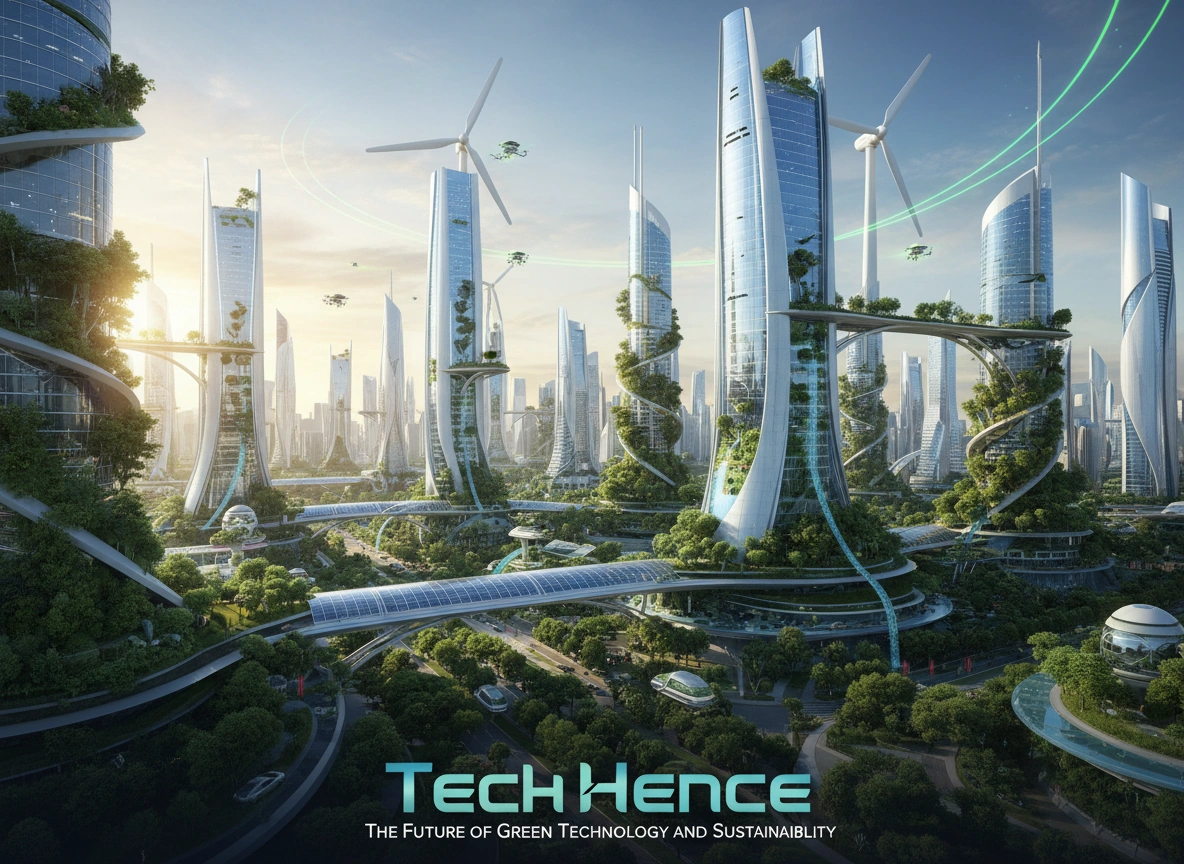
The urgency of the climate crisis has pushed humanity to a pivotal moment. We can no longer rely on industrial habits that deplete our planet. Instead, we must pivot toward systems that restore it. This is where the concept of “Tech Hence”—the technological path forward—becomes vital. It represents the inevitable intersection of human innovation and ecological necessity.
Technology once drove environmental degradation through resource extraction and pollution. Today, it is our best hope for reversing that damage. From renewable energy grids that think for themselves to biodegradable materials grown in labs, the future of sustainability is being written in code and engineered in clean rooms.
This article explores the cutting-edge advancements defining this new era. We will examine how green technology is reshaping industries, the tangible impacts on sustainability, and the hurdles we must overcome to build a truly green future.
The Evolution of Green Technology
Green technology, or “cleantech,” has moved far beyond simple solar panels and recycling bins. It now encompasses a vast ecosystem of innovations designed to mitigate environmental impact. The shift is systemic. We aren’t just changing fuel sources; we are redesigning how we build, travel, eat, and live.
Smart Grids and Energy Storage
Renewable energy sources like wind and solar are intermittent. The sun doesn’t always shine, and the wind doesn’t always blow. This inconsistency was once a major barrier to adoption. The solution lies in smart grids and advanced battery storage.
Smart grids use artificial intelligence (AI) and the Internet of Things (IoT) to balance energy loads in real-time. They can predict surges in demand and distribute power efficiently, reducing waste. Coupled with next-generation energy storage—such as solid-state batteries and flow batteries—we can now store excess renewable energy for days or weeks. This ensures a stable power supply even when weather conditions are unfavorable.
Carbon Capture and Utilization
Reducing emissions is critical, but it may no longer be enough. We need to actively remove carbon dioxide from the atmosphere. Direct Air Capture (DAC) technology acts like a giant mechanical tree, sucking CO2 out of the air.
However, the “Tech Hence” philosophy goes a step further. It asks: What can we do with this waste? Innovators are now turning captured carbon into useful products. Companies are successfully converting CO2 into synthetic fuels, concrete, and even diamonds. This creates a circular carbon economy where pollutants become resources.
Innovations Reshaping Sustainability
The application of green technology extends into every sector of the global economy. Here are some specific examples of how innovation is driving sustainability.
The Revolution in Agriculture (AgTech)
Agriculture is a significant contributor to greenhouse gas emissions and water usage. AgTech is transforming farming into a precision science.
- Vertical Farming: By growing crops in stacked layers indoors, vertical farms use up to 95% less water than traditional farming. They eliminate the need for pesticides and reduce transportation emissions by locating farms near urban centers.
- Precision Agriculture: Drones and sensors monitor soil health and crop conditions. Farmers can apply water and fertilizer only exactly where needed, preventing chemical runoff and conserving resources.
Green Architecture and Sustainable Cities
Our cities are the biggest consumers of energy. The future of urbanization relies on smart, green infrastructure.
- Self-Healing Concrete: Concrete production is notoriously carbon-intensive. Scientists have developed “living” concrete infused with bacteria. When cracks form, water activates the bacteria, which produce limestone to seal the crack. This extends the lifespan of buildings and reduces the need for repairs.
- Passive Building Design: Modern architecture prioritizes energy efficiency through design. By utilizing natural light, ventilation, and thermal mass, buildings can maintain comfortable temperatures with minimal heating or cooling.
The Circular Economy in Manufacturing
The “take-make-waste” model is obsolete. Advanced manufacturing technologies are enabling a circular economy where materials are kept in use for as long as possible.
- 3D Printing: Additive manufacturing reduces waste by using only the material necessary to create a part. It also allows for lighter, stronger designs that improve fuel efficiency in vehicles and aircraft.
- Bioplastics: Researchers are developing plastics derived from algae, mushrooms, and corn starch. unlike petroleum-based plastics, these materials degrade naturally, reducing the burden on landfills and oceans.
Challenges in Global Adoption
Despite the promise of these technologies, the path forward is not without obstacles. Adopting green tech on a global scale requires overcoming significant economic, political, and technical hurdles.
The Green Premium
New technologies are often more expensive than their traditional counterparts. This price difference is known as the “Green Premium.” For example, sustainable aviation fuel currently costs significantly more than conventional jet fuel.
To make green tech accessible, we must drive down costs through scale and innovation. Governments play a crucial role here. Subsidies, tax incentives, and carbon pricing can level the playing field, making sustainable options more competitive.
Infrastructure Limitations
transitioning to electric vehicles (EVs) requires a massive overhaul of our infrastructure. We need millions of charging stations, upgraded power grids, and robust supply chains for battery materials like lithium and cobalt.
Developing nations face an even steeper climb. Many countries are still working to provide basic electricity access. Leapfrogging directly to green technology requires international cooperation and financial support from developed nations.
E-Waste and Resource Scarcity
Ironically, green technology relies on finite resources. Solar panels, wind turbines, and batteries require rare earth metals. Extracting these materials can have severe environmental and social consequences.
Furthermore, as we upgrade to new technologies, we create a tidal wave of electronic waste. We must design products for disassembly and recycling from the start. “Tech Hence” implies responsible innovation—considering the end-of-life of a product before it is even manufactured.
The Role of AI in Environmental Conservation
Artificial Intelligence is perhaps the most powerful accelerator for sustainability. It processes data at a scale humans cannot, revealing patterns and solutions we might miss.
optimizing Energy Consumption
Google used DeepMind’s AI to reduce the energy used for cooling its data centers by 40%. This same logic is being applied to office buildings and factories worldwide. AI algorithms constantly tweak HVAC systems to maximize efficiency without compromising comfort.
Monitoring Biodiversity
Conservationists use AI to track endangered species and monitor ecosystem health. Acoustic sensors in rainforests listen for the sounds of chainsaws or gunshots, alerting rangers to illegal logging and poaching in real-time. Satellite imagery analyzed by AI helps track deforestation rates and measure carbon stocks in forests.
Future Outlook: Integration and Resilience
The future of green technology is not about a single breakthrough invention. It is about the integration of multiple systems working in harmony.
Imagine a city where your electric car charges overnight using wind energy. During the day, while parked at work, the car’s battery feeds energy back into the grid during peak hours to stabilize it. Your office building adjusts its own temperature based on the weather forecast and occupancy. Your lunch comes from a local vertical farm, and the packaging is composted to feed the soil for the next crop.
This interconnectedness builds resilience. A decentralized energy grid is harder to knock out during a storm. A diverse food system is less vulnerable to droughts.
The Human Element
Technology is a tool, not a savior. The success of “Tech Hence” depends on human behavior and policy. We need educational systems that prepare the next generation of green engineers. We need consumers who demand sustainable products. We need leaders willing to make long-term investments over short-term profits.
Conclusion
“Tech Hence” signifies a departure from the industrial past and an arrival at a sustainable future. The technologies we develop today—from carbon-eating concrete to AI-driven energy grids—will determine the quality of life for centuries to come.
The shift is underway, but the pace must accelerate. We have the innovation; now we need the implementation. By embracing green technology not just as a niche market but as the fundamental operating system of our global economy, we can secure a future that is both technologically advanced and ecologically sound. The tools are in our hands. It is time to build.
Actionable Next Steps
- Audit Your Energy: Use smart home devices to monitor and reduce your personal energy consumption.
- Support Green Innovation: When investing, look for funds that prioritize ESG (Environmental, Social, and Governance) criteria.
- Stay Informed: Follow developments in renewable energy and circular economy to advocate for smarter policies in your community.
Please visit website for more info.
